Want to be in the loop?
subscribe to
our notification
Business News
PROPOSED LENDING CHANGES THREATEN MARKET RECOVERY
A draft document issued by the central bank (SBV) stated that the risk index of receivable lending for real estate and securities would be raised from 150 per cent (the lowest level), as stipulated in the existing Circular No.36/2014/TT-NHNN on limits and ratios to ensure safety in operation of credit institutions and foreign banks’ branches, to 250 per cent. The maximum ratio of short-term funds used for medium- and long-term loans would also be adjusted down to 40 per cent, from the current 60 per cent.
The Vietnam Real Estate Association (VREA) has warned that this draft document, if realised, could derail the smooth recovery of the real estate market.
A VREA representative noted that hard lessons were learned in the past when certain adjustments negatively impacted the real estate market. These adjustments also upset investors and buyers, and created stockpiles in the market.
Pham Sy Liem, former Deputy Minister of Construction said that the adjustment of the risk index should be carefully considered. “Some segments of real estate market such as residential, hospitality, and second-homes currently have high consumption rates. So, why should we tighten credit to these areas?”
According to Phuoc Vo, director of valuation & research at Cushman & Wakefield Vietnam, if this draft circular is approved, it would immediately have an impact on the real estate market for 2016 and subsequent years for all involved in the sector.
“On the positive side, the SBV will manage the credit flow to minimise the risk of a real estate bubble and reduce the fever of the current market, as well as preserve a healthy financial status for the market. For these reasons, only prestigious developers will be given access to financial resources,” Phuoc said.
This adjustment, Phuoc added, would unfortunately halt the majority of real estate developers (who are implementing their projects with the use of loans) due to a lack of capital flow. Therefore many projects might have to extend their schedule or more seriously – might have to halt their projects entirely. “Buyers will also face greater difficulty in obtaining loans to purchase properties.”
“The risk index should be applied differently to each segment of the real estate market, as each segment has its own level of risks,” he added.
David Blackhall, managing director of real estate company VinaCapital, also argued that any restriction on bank lending to the real estate sector during 2016 would significantly slow the rate of recovery that the real estate market experiences, which has only just begun to yield returns for buyers and developers.
“If liquidity is limited, then this will hinder growth and there will be a loss of confidence in the market. Real estate investment and growth are the key factors for overall economic growth, and the real estate, construction, and construction material sectors are some of the largest employers of liquidity,” Blackhall told VIR.
Meanwhile, Le Hoang Chau, chairman of the Ho Chi Minh City Real Estate Association, requested that the implementation of the draft be delayed. Chau claimed that the real estate market was currently in a healthy position with high liquidity and stable development.
“The risk of a real estate bubble is unsubstantiated as yet, so we should maintain our current market condition to allow the real estate sector to continue developing,” Chau said.
To counteract speculation, which could cause a real estate bubble, the government should take effective measures such as taxation against speculative activities, financial and credit tools, and other housing development plans in order to ensure that the market remains stable, Chau added.
Banking expert Nguyen Tri Hieu, however, supported the central bank’s proposal. “I personally supported the lowering of the ratio of short-term capital used for medium- and long-term lending, at the ratio of 30 per cent as before.
“A year ago, when the SBV decided to lift the ratio from 30 to 60 per cent, I was not in agreement with it… because bank liquidity is very important. Banks that have used up to 60 per cent of their short-term capital for medium- and long-term loans may hurt their liquidity. This is very dangerous. So I think trimming down the ratio is appropriate,” Hieu added.
The Ministry of Construction’s Department of Housing and Real Estate Market Management reported that as of November 2015, outstanding loans invested in the real estate market were as high as VND375 trillion ($16.67 billion), a surge of 20 per cent compared to the same figure in December 2014. This is a result of Circular No. 36 which came into effect on February 1, 2015.
Source: VIR
Related News

INFRASTRUCTURE / CONSTRUCTION / LOGISTIC / PORT
VIỆT NAM-CAMBODIA TRADE GATHERS PACE TOWARDS $20 BILLION TARGET
Trade between Việt Nam and Cambodia continues to grow, remaining a bright spot and a key pillar of bilateral cooperation as the two countries aim to raise two-way trade to US$20 billion in the coming years. After setting a record of more than $11.3 billion last year, bilateral trade reached about $8.7 billion in the first eight months of this year, up 8.3 per cent year on year.
TECHNOLOGY
AI BEGINNING TO RESHAPE RECRUITMENT CRITERIA
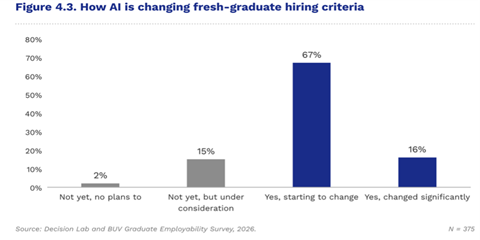
Digital literacy is the only capability area in which fresh graduates meet employers’ expectations, according to a new report. Yet, it is also the standard rising fastest, as businesses increasingly expect new hires to use AI effectively in the workplace. Some 83 per cent of employers say AI has changed, or is beginning to change, their hiring criteria, while 94 per cent report higher expectations for digital and AI capabilities than they had two to three years ago.

INFRASTRUCTURE / CONSTRUCTION / LOGISTIC / PORT
ĐÀ NẴNG GREEN-LIGHTS US$105 MILLION THAI DEVELOPMENT DEAL
The central city has approved an investment proposal by Thailand’s WHA Group to develop infrastructure for the 400ha WHA Đà Nẵng Industrial Park project on two communes of Thăng Bình and Đồng Dương, with an investment of more than VNĐ2.7 trillion (US$105 million). The city said it approved WHA Industrial Development International's status as an investor in the project, which is expected to take place between 2027 and 2034.

VIETNAM ECONOMY INVESTMENT
MOBILE PHONE EXPORTS RISE 20% TO $51.8 BILLION IN FIRST NINE MONTHS
Exports of mobile phones and components rose 20 per cent year-on-year to nearly US$51.8 billion in the first nine months of 2026, with China, the US and Republic of Korea accounting for more than half of the total. Shipments to the three markets reached a combined $26.18 billion, or 50.6 per cent of total exports of the product group during the period, according to data from the Vietnam Department of Customs under the Ministry of Finance.

VIETNAM ECONOMY INVESTMENT
FRUIT AND VEGETABLE EXPORTS POISED TO HIT $10 BILLION IN 2026
Fruit and vegetable exports are on track to reach nearly US$10 billion in 2026, after rising 19.9 per cent year on year to nearly US$7.4 billion in the first nine months, driven by strong seasonal demand and abundant tropical fruit supplies. The Ministry of Agriculture and Environment said the growth reflected stronger international demand for fresh produce and processed agricultural products.
GARMENT / TEXTILE
TEXTILE EXPORTS FACE DUAL CHALLENGES OF SUSTAINING ORDERS AND BOOSTING EFFICIENCY AMID GROWING COMPETITION
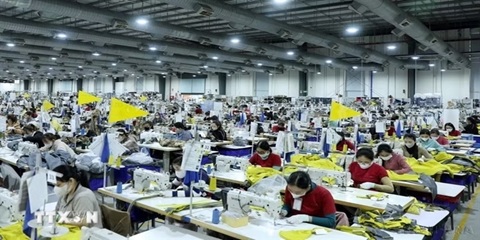
Data shows that the textile and garment sector maintained its growth momentum in the first nine months of this year. The industry's total export turnover reached an estimated US$35.721 billion in the first nine months of this year, up 3.3 per cent year-on-year. Despite posting encouraging export figures, Vietnamese textile and garment enterprises continue to navigate unpredictable market variables.
Events Sponsors






















